
In December 2024, Inawa Institute ran the two training sessions that assembled the field team of the Global Health Program Evaluation, Analysis, Research, and Learning (GH-PEARL) Project in Benin. Their purpose was to prepare the agents who carry out Third-Party Monitoring (TPM), the independent verification of health programs supported by USAID. Koffi Gueguehoun, Director General of Inawa Institute, and Richard Dossou-Yovo, GH-PEARL Program Lead and Palladium representative, led the training team at both sessions.
The first session was held in Cotonou from December 3 to 8, in partnership with the Palladium Group, and trained 10 supervisor candidates among 32 participants. Jenny Mwanza, Palladium Technical Director, and Bertille Agueh Onambele, Deputy Director of the Health Office at USAID and the Agency’s coordinator for the mission, took part with her team. The second session, in Parakou from December 13 to 22, brought together 72 participants and trained 51 monitor candidates.
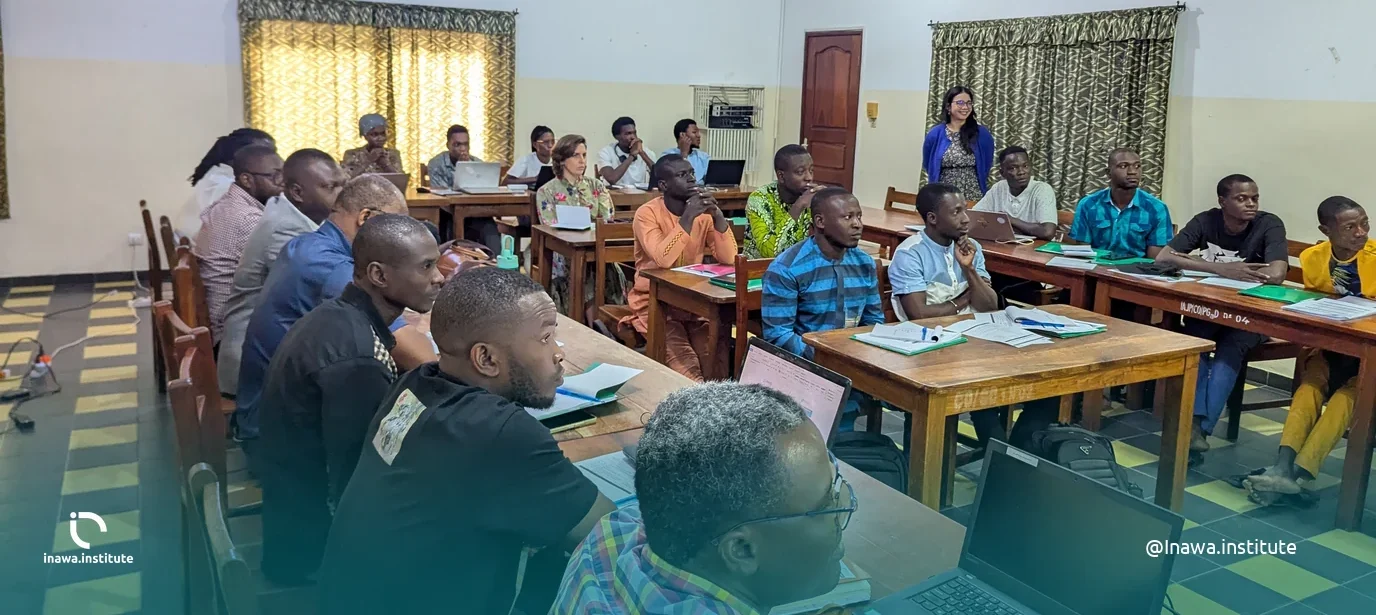
The two sessions were designed as one sequence. Each supervisor prepared in Cotonou now leads one of the ten blocks into which the mission divides northern Benin, from Malanville and Karimama in the Alibori to Bassila in the Donga. In Parakou, monitors worked inside those same block teams, under the supervisor who will lead them in the field, so that each group could adapt the shared methodology to the realities of its own territory.
Training combined classroom sessions, group work, practical exercises, and role-playing. Participants covered field observation, key informant interviews, digital data collection on the SurveyCTO platform, consent and confidentiality, security procedures, and incident reporting. Learning was measured at the end of every day across the ten days in Parakou.
Representatives of the implementing partners presented their programs at the first session: DEDRAS, Chemonics, Breakthrough Action, CREC, MSH, the National Malaria Control Program (PNLP), WHO, FAO, and PSI. The mission also follows a One Health approach, linking human, animal, and environmental health. Between February and June 2025, the block teams are due to conduct approximately 1,500 site visits, observing trainings and supervision activities, checking the availability and use of equipment, and interviewing beneficiaries and stakeholders. The evidence they bring back will show where USAID-supported health programs in Benin are working, and where they need to be corrected.

